
Massage Chair Placement: How Location Can Shape a Wellness Business


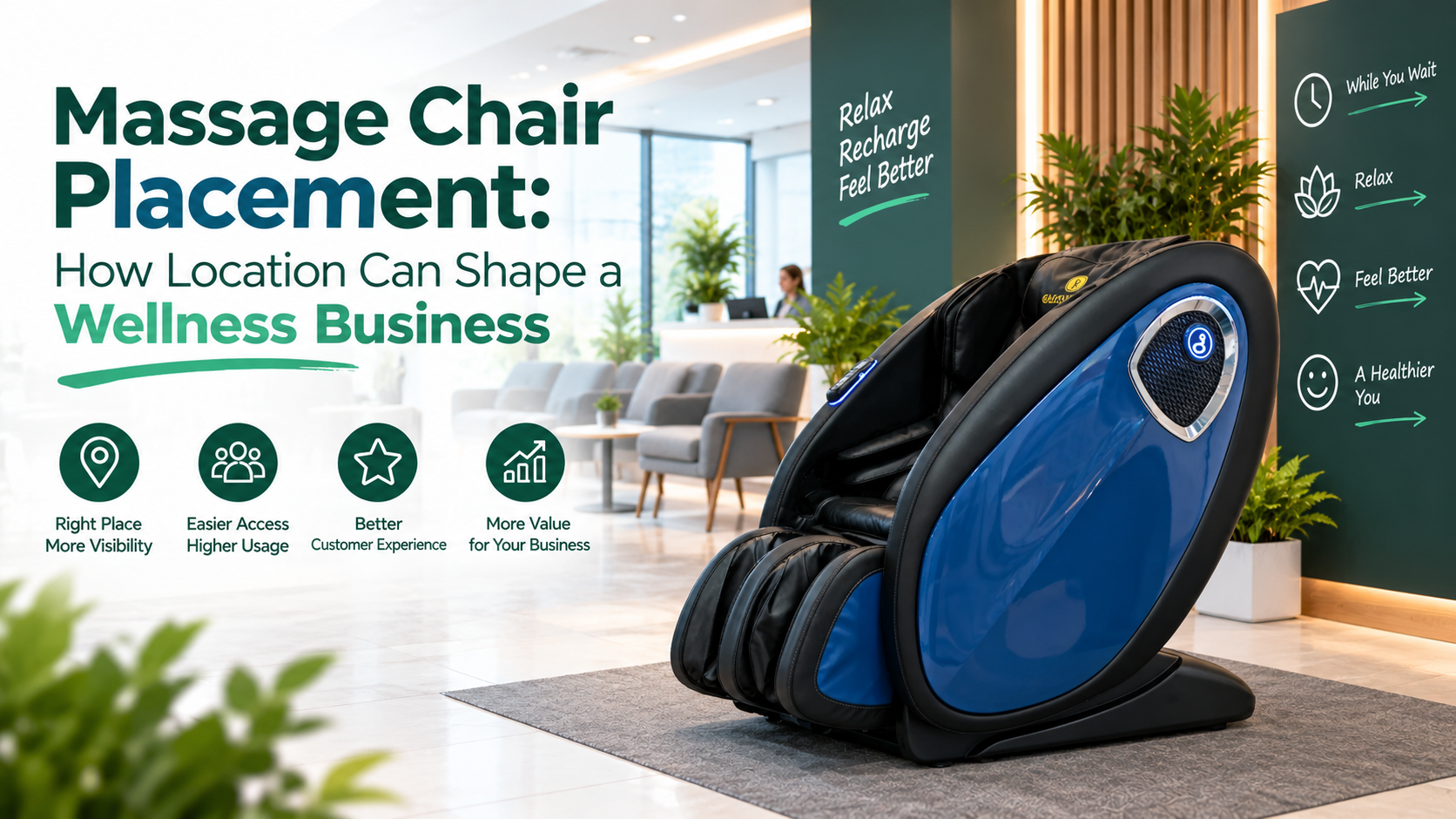
Massage Chair Placement: How Location Can Shape a Wellness Business
A massage chair can have advanced technology, a comfortable design, and an attractive self-service model, but where it is placed can make a major difference to how people discover and use it.
That is why massage chair placement deserves more attention when businesses explore automated wellness solutions. A chair hidden in a low-traffic corner may go unnoticed, while the same station positioned near a natural waiting or relaxation area can become a visible part of the customer experience.
For businesses in Canada, the goal is not simply to find an empty spot. It is to identify a location where convenience, visibility, available space, and customer behaviour come together.
Why Massage Chair Placement Matters
Commercial wellness is closely connected to foot traffic and dwell time.
People need to notice a massage station before they can decide whether to use it. If it is placed somewhere difficult to see or reach, even an excellent chair may receive limited attention.
Effective massage chair placement starts with understanding how people move through a property.
Ask a few simple questions:
- Where do visitors naturally slow down?
- Where do people wait?
- Which areas have consistent foot traffic?
- Where is there enough space for comfortable use?
- Can customers easily see the chair?
- Is the location accessible without disrupting movement?
These questions can help businesses move beyond simply choosing an available corner.
1. Near Waiting Areas
Waiting areas are naturally suited to wellness because customers already have time available.
Medical facilities, service centres, offices, hotels, and other businesses can consider placing a station where visitors regularly wait. Instead of staring at a screen or watching the clock, people have the option of using their waiting time differently.
A massage chair for waiting areas can therefore become an additional customer amenity rather than simply another piece of furniture.
The important consideration is to keep the chair accessible without blocking entrances, exits, walkways, or other seating.
2. Near High-Traffic Common Areas
High visibility can encourage spontaneous use.
Shopping centres, entertainment venues, airports, and other busy properties often have shared spaces where people naturally pass through. A strategically positioned commercial massage chair can catch attention from people who may not have planned to use one.
The idea is simple: visibility creates awareness.
However, high traffic should not mean placing the chair in the middle of a crowded walkway. The station still needs a comfortable area where users can sit without feeling that they are in everyone's way.
3. In Employee Break Areas
Businesses do not have to limit automated wellness to customers.
Employee lounges and break rooms can also provide suitable locations. A workplace massage station can give employees another option during breaks without requiring the company to create a dedicated spa room.
This can work particularly well in large offices, corporate buildings, warehouses, and other workplaces where employees already spend extended periods on-site.
The location should remain easy to access while maintaining enough privacy for employees who want a quiet break.
4. Inside Hotels and Guest Areas
Hotels naturally combine accommodation with waiting, relaxation, and downtime.
A guest may have time before check-in, between activities, or after returning from a long day. A strategically positioned wellness station can give them another way to spend those spare minutes.
Hotel lounges, lobby areas, and other suitable common spaces can potentially accommodate automated massage stations when the layout allows.
For location partners, the goal is to make wellness accessible without requiring a large dedicated treatment room.
5. At Fitness and Recreation Facilities
Fitness facilities already attract people who are interested in wellness and recovery.
A massage station can be positioned near lounge areas, entrances, or post-workout spaces where members naturally spend time.
Rather than placing it directly beside exercise equipment, businesses can create a separate relaxation zone. This gives users a clear transition from physical activity to downtime.
The same principle can apply to recreational facilities, sports centres, and community wellness spaces.
6. Near Entrances — But Not in the Way
Entrances can provide strong visibility, but placement requires careful planning.
A station near an entrance can immediately communicate that the business offers an additional wellness experience. However, it should not interfere with customer flow, accessibility, security, or emergency routes.
A visible massage chair should be easy to notice without becoming an obstacle.
The ideal position often combines visibility with enough surrounding space for users to approach, sit down, and leave comfortably.
How Much Space Does a Commercial Massage Chair Need?
Space is one of the first practical considerations when planning installation.
According to iSPA Express, its location partner information indicates that each station requires approximately 20 square feet. The company also recommends considering visibility, foot traffic, accessibility, and the surrounding environment when selecting a location.
This means businesses should measure the proposed area before committing to installation.
Consider more than the chair's footprint. Leave sufficient room for people to approach the station and move around it comfortably.
Think About Dwell Time, Not Just Foot Traffic
A location can have thousands of people passing through every day and still be unsuitable.
Why?
Because not everyone has time to stop.
This is where customer dwell time becomes important.
Someone walking quickly through a corridor may notice a massage chair but never use it. Someone waiting 15 minutes for an appointment has a very different opportunity.
That is why businesses should consider both traffic and time.
The strongest locations may be places where people naturally pause, wait, browse, or relax.
Technology Can Make Location Management Easier
Modern commercial massage stations are becoming more connected.
iSPA Express describes its business model around self-service operation, digital payments, location partnerships, and support for commercial partners.
Gagake iSPA Express also describes connected massage technology and cloud-based management for its commercial network, helping bring technology into the operational side of automated wellness.
This means the physical placement of the chair is only one part of the bigger picture.
Businesses can think about placement together with pricing, accessibility, customer behaviour, maintenance, and ongoing management.
What Makes a Location Worth Considering?
Before installing a station, businesses can create a simple checklist:
- Visibility: Can people easily notice it?
- Traffic: Do enough people regularly pass the location?
- Dwell time: Do visitors have a reason to stay?
- Space: Is there adequate room around the station?
- Accessibility: Can users reach it comfortably?
- Environment: Does the surrounding area feel appropriate for relaxation?
- Convenience: Can customers use it without disrupting normal operations?
These factors can help turn massage chair placement from a simple installation decision into a broader location strategy.
Turning Ordinary Space Into a Wellness Opportunity
Commercial properties often contain areas that are underused but still receive regular traffic.
A carefully positioned massage station can give that space a new function.
Instead of asking where a chair can physically fit, businesses can ask where a wellness experience would make the most sense.
That small change in thinking can influence everything from customer awareness to overall usability.
For Canadian businesses exploring automated wellness, iSPA Express provides commercial massage stations and partnership opportunities designed around self-service access and location-based operation.
The right massage chair placement is ultimately about matching the equipment with human behaviour.
When people naturally have time, space, and a reason to pause, a simple massage station can become much more than an empty-space filler.
It can become part of the experience people remember.


Frequently Asked Questions
Locations with good visibility, natural waiting time, sufficient space, and regular foot traffic can be suitable. The ideal position depends on the property's layout and customer behaviour.
iSPA Express states that its stations require approximately 20 square feet, although businesses should also account for surrounding access and movement.
Yes. Employee lounges, break areas, and suitable common spaces can provide practical locations for workplace wellness stations.
Not necessarily. Dwell time is also important because people need enough time and convenience to actually use the station.