
How Does a Massage Chair Work? A Simple Guide to Modern Massage Technology


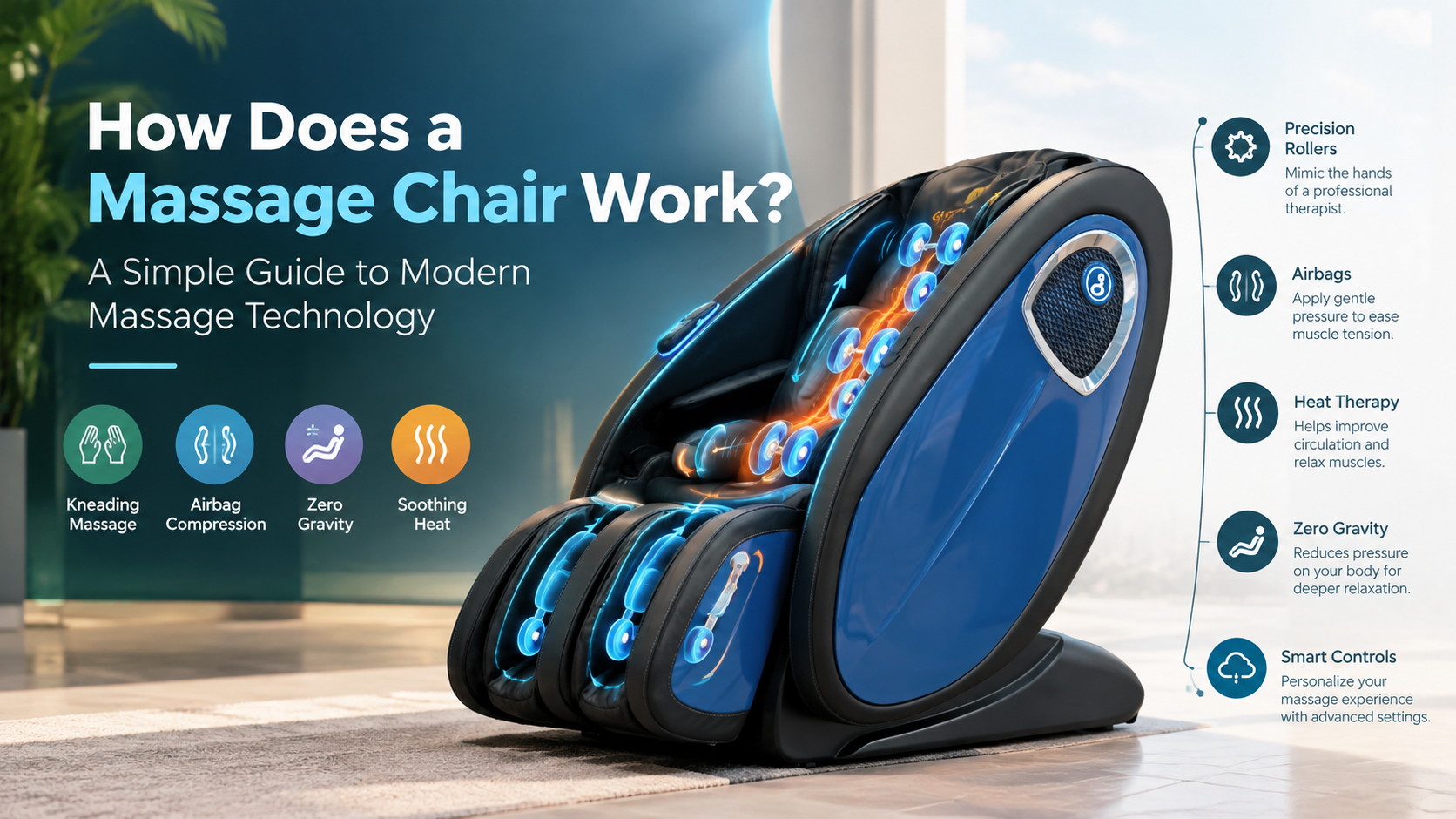
How Does a Massage Chair Work? A Simple Guide to Modern Massage Technology
A modern massage chair can look like an ordinary recliner at first glance, but inside it is a combination of mechanical systems, sensors, airbags, motors, and programmed movements designed to create an automated massage experience.
With features ranging from rollers and compression to reclining positions and multiple massage programs, today's chairs can offer considerably more than simple vibration.
So, how does a massage chair work?
Understanding the technology behind these chairs can help consumers, businesses, and wellness spaces make better-informed decisions when exploring automated massage.
What Is a Massage Chair?
A massage chair is a powered chair that uses mechanical components to reproduce different massage movements.
Instead of a massage therapist manually controlling pressure and movement, the chair uses motors and programmed systems to guide its massage mechanisms.
Depending on the model, a chair may include:
- Massage rollers
- Air compression
- Reclining functions
- Foot and calf massage
- Multiple massage programs
- Body scanning
- Adjustable intensity
- Heat functions
- Zero-gravity positioning
The combination of these features determines how the overall experience feels.
How Do Massage Rollers Work?
The rollers are one of the most important components in a modern chair.
A massage roller system moves along a predefined track while performing programmed movements. Depending on the chair, these movements can include kneading, tapping, rolling, or other patterns.
Some advanced chairs allow rollers to move in multiple directions and adjust their position according to the user's body.
This is what gives automated massage a more dynamic feeling than a basic vibrating chair.
The track design also matters. Different systems can provide different levels of back and lower-body coverage, so consumers should look at the actual roller pathway rather than choosing a chair based solely on a marketing label.
What Is Body Scanning Technology?
Some modern chairs use sensors to identify the user's approximate body position before beginning a massage.
This is commonly referred to as body scanning technology.
The purpose is to help position the massage mechanism according to the user's height or body structure. Instead of using exactly the same starting points for everyone, the chair can make adjustments to create a more personalized session.
Body scanning is particularly useful when a chair is designed to accommodate users with different heights.
However, the sophistication of scanning systems varies between models, so it is worth checking exactly what a particular chair's system can detect and adjust.
How Do Airbags Work in a Massage Chair?
Rollers aren't the only technology involved.
Many modern chairs include massage chair airbags that inflate and deflate around different parts of the body.
Depending on the design, airbags may be positioned around areas such as the shoulders, arms, hips, calves, or feet.
The sensation is different from mechanical rollers.
While rollers create moving pressure along a track, airbags provide a compression-style experience. When combined, the two systems can create a more comprehensive automated massage session.
Gagake iSPA Express's commercial G-01, for example, incorporates six sets of airbags alongside robotic massage technology and multiple massage programs.
What Is a Full Body Massage Chair?
A full body massage chair is designed to provide massage coverage across multiple areas rather than focusing exclusively on the back.
Depending on the model, this may include:
- Neck
- Shoulders
- Back
- Waist
- Hips
- Arms
- Calves
- Feet
Not every chair covers all these areas in the same way.
Some rely primarily on rollers, while others combine rollers, airbags, foot rollers, and other mechanisms.
This is why consumers should examine the complete feature set when comparing models.
What Is a Shiatsu Massage Chair?
Another popular search term is Shiatsu massage chair.
Shiatsu is traditionally associated with Japanese massage techniques involving pressure applied to specific areas of the body. In a massage chair, the experience is recreated mechanically through programmed roller movements and pressure patterns.
A chair may offer a Shiatsu-style program alongside other options such as kneading, tapping, or rolling.
The important point is that an automated chair is using mechanical technology to reproduce certain sensations associated with massage techniques. It is not the same as receiving hands-on treatment from a trained massage professional.
Why Do Massage Chairs Recline?
Reclining is more than a design feature.
Many massage chairs allow users to move from an upright position into a reclined position while the massage is taking place.
Some advanced models also offer zero-gravity positioning, where the chair reclines and elevates the legs to create a more supported posture.
Gagake's G-01 Full-Body Pod Massage Station includes zero-gravity positioning alongside robotic massage, airbags, and multiple automated programs.
The reclining function can also make the chair feel more like a dedicated relaxation space rather than simply a conventional seat.
What Are the Benefits of a Massage Chair?
The most obvious massage chair benefits relate to convenience and relaxation.
A massage chair can provide:
Convenient Access
Users can access a session without booking an appointment or arranging for a therapist to be available.
Consistent Sessions
A programmed chair can repeat the same selected massage routine whenever the user chooses.
Multiple Options
Different programs and intensity settings can allow users to select an experience according to their preference.
Short Sessions
Automated massage can be useful when someone only has a limited amount of free time.
Easy Self-Service
Commercial chairs can allow customers to operate the experience independently.
These benefits help explain why automated massage chairs are increasingly appearing outside traditional home environments.
Where Are Massage Chairs Being Used?
Massage chairs are no longer restricted to private homes.
Commercial self-service stations can be found in environments where people naturally have time to pause, including airports, shopping centres, hotels, gyms, offices, and other high-traffic locations.
This makes the technology particularly interesting for modern wellness.
Instead of requiring someone to travel specifically to a spa, automated massage can be available in places people are already visiting.
A traveller may use one while waiting. A shopper may take a short break. An employee may use one during downtime.
The experience becomes part of the environment.
How Do Commercial Massage Chairs Work?
Commercial models add another layer of technology.
In addition to the massage mechanisms, they may include digital payment systems, automated session controls, connectivity, and remote monitoring.
iSPA Express describes its stations as self-service systems that can accept phone-based payments and operate with minimal staff involvement.
Behind the scenes, connected systems can also help location partners manage equipment and monitor operations.
This is one reason commercial massage chairs are different from many residential models. They are designed not only around the user's comfort but also around accessibility, operation, maintenance, and public use.
Is a Massage Chair the Same as a Professional Massage?
No.
A massage chair uses automated mechanical movements, while a professional massage involves a trained practitioner who can respond manually to the individual during the session.
A chair can provide convenience and a consistent automated experience, but it should not be presented as a direct replacement for professional care.
People with specific medical conditions, injuries, or health concerns should consult an appropriate healthcare professional before using massage equipment.
Understanding the Technology Behind Modern Relaxation
The appeal of a massage chair isn't based on one feature.
The experience comes from several systems working together: rollers create programmed movements, airbags provide compression, sensors can help position the massage, reclining changes body positioning, and software controls the overall session.
That combination has turned the traditional chair into a sophisticated piece of wellness technology.
For Canadian businesses, Gagake iSPA Express brings these concepts into commercial environments through self-service massage stations designed for convenient access and automated operation.
As the technology continues to evolve, understanding how these systems work makes it easier to look beyond the appearance of a chair and evaluate what it actually offers.
Gagake iSPA Express continues to develop connected massage experiences that combine automated technology with convenient relaxation in commercial spaces across Canada.


Frequently Asked Questions
Session lengths vary by model and location. Commercial stations may offer several short-session options so users can choose according to the time they have available.
No. Airbag placement and coverage vary considerably between models.
No. Body scanning is an additional feature found on some models rather than a standard feature across every massage chair.
Yes. Commercial massage stations are designed specifically for environments such as hotels, airports, offices, shopping centres, gyms, and other public spaces.